Wednesday, July 30, 2014

What did Belle release Scrooge from in A Christmas Carol?

During his visits with the Ghost of Christmas Past, Ebenezer revisits a scene involving Belle, his beautiful ex-fiancee.  In the scene, Belle accuses Ebenezer of loving money more than he loves her.  When Scrooge is not able to appropriately and convincingly counter her accusation, Belle releases Ebenezer from their engagement.


To add insult to injury, while the Ghost of Christmas Past concentrates primarily on events in the more distant past, he does give Ebenezer a glimpse into Belle's more recent life.  Here, we see that Belle has indeed gotten married and is surrounded both by a doting husband and loving children.  Ironically, Ebenezer happens on the scene just as Belle is recounting details of her past love with Ebenezer and her husband is musing that Ebenezer must be lonely now that Jacob Marley has died.

Tuesday, July 29, 2014

Why does Johnny give Ponyboy the advice of staying gold in The Outsiders?

Johnny told Ponyboy to stay gold to remind him that he did not need to stay in the gang life.


Although Pony describes the greasers as protecting each other like family and assures the reader that the kids in his town divide their affiliation by socioeconomic status, the greasers are still a gang.  The often get into trouble, with the law or with the other gang, the Socs.


Pony tells us that greasers are poorer than Socs, and also “wilder.”


Not like the Socs, who jump greasers and wreck houses and throw beer blasts for kicks … Greasers are almost like hoods; we steal things and drive old souped-up cars and hold up gas stations and have a gang fight once in a while. (Ch. 1)


Although he says he does not do those things, they are part of the life of a greaser.  Pony is expected to participate in these activities eventually, especially fighting.  He says that greasers can’t walk alone for fear they will be jumped by Socs.  


Pony is different from the other Socs.  He does well in school and likes to read.  He is just a deep thinker overall.  Johnny is aware of this.  When he and Pony spend time on the run after Johnny accidentally kills a Soc, Johnny brings Pony a book and the two spend their time discussing the novel and poetry.


While on the run, in addition to reading Gone with the Wind, they discuss the Robert Frost poem “Nothing Gold Can Stay.”  The poem is about young things in nature not lasting, but it also has a metaphorical quality for Pony.  It means that as you get older, you get more corrupt.  In the hospital, Johnny tells Pony to stay gold.


"We told him about beatin' the Socs and... I don't know, he just died." He told me to stay gold, I remembered.  What was he talking about? (Ch. 10)


Johnny means that Pony has the potential to get out of the gang life. He can get an education, leave town, and become a responsible and contributing member of society.  With Johnny’s last words, he reminds Pony that the gang life is dangerous and while not all greasers have a choice, he does.

What is the definition of Setting?

Setting is the time and place in which the action of narrative is set. In short stories, poetry, novels, and non-fiction, setting is generally created by description whereas in drama setting is usually established by stage directions and dialogue.


Setting in fiction is one of the five elements (Plot, Character, Point of View, Theme, and Setting), In addition to establishing the background in which the action takes place, setting can also create mood or emotional atmosphere.


Edgar Allan Poe makes great use of setting for creating an emotional atmosphere. For instance, in his story "The Fall of the House of Usher," the family mansion is a Gothic setting of a decaying mansion helps to underscore the decadence and disease within the Usher family itself. In another story of Poe's, "The Cask of Amontillado," the setting of the catacombs creates an eeriness and the suggestion of death that relates to the narrator's plot to kill another man.
Historical settings play important roles in narratives. In A Tale of Two Cities, for instance, the two settings of Paris and London play important roles in the plot that deals with the French Revolution as action pertinent to this upheaval takes place in Paris, actions involving aristocrats and peasants. other actions that connect to Paris are in the setting of London.

If the story "Two Kinds" had been told through Suyuan's point of view, what type of narration would be appropriate?

If the story was told through the mom's point of view, then the narration would still be in first person.  The difference is that Suyuan is telling the story. The type of narration wouldn't change.  What would change is the tone of the story.  "Two Kinds" is normally told from Jing-Mei's perspective.  She's a stubborn, slightly rebellious young girl, so along with that comes her attitude that what her mother is making her do is "the worst thing ever."  I hear it all of the time from my junior high students when they talk about their own parents.  


If the story were told from Suyuan's perspective, the narration's tone would move from hopeful and reasoning to angry and exasperated.  In Suyuan's mind it would make perfect sense that her daughter could be the next Shirley Temple with enough hard work.  At first, the narration would continue in the hopeful thread as Jing-Mei goes along with the plans at first.  But as Jing-Mei becomes more obstinate, the narration's tone would shift to the frustrated tone that I hear from a lot of parents at parent teacher conferences.  Suyuan would express the feelings of "why can't you just do what I say" to Jing-Mei.  As a parent of three, I would actually very much like to read the story of "Two Kinds" from Suyuan's perspective, because I think I could related quite well to her tone and interpretation of events.  

Monday, July 28, 2014

In The Bronze Bow, how many boys end up joining Joel and Daniel's group?

In Chapter 12 of The Bronze Bow, Daniel begins to use his blacksmith shop as a meeting place for young men who want to unite together to fight against Roman oppression. First Joel brings Kemuel to meet Daniel, then Nathan joins them. They agree that they have to be selective about who they let into the group. They choose the bronze bow as their secret sign by which they can identify the men who are dedicated to their cause, which they feel is "war." After just three weeks' time, the group of four grew "to seven, then to nine--twelve--sixteen." The maximum number they eventually achieve is twenty-one. Several times later in the book, it refers to the group of nineteen men. This can be confusing, but can be reconciled by realizing that the originators of the group, Joel and Daniel, are not counted in that number. The band decreases in size when Joel is arrested by Romans and several of the group die in an attempted rescue.

Sunday, July 27, 2014

Does a parallel circuit in household electricity decrease electricity bills, as the total voltage needed is less, so therefore, the total energy...

Wiring in parallel would do absolutely nothing to affect your electricity consumption, and could actually be quite dangerous due to the wild swings in resistance that would occur as appliances are plugged and unplugged. Make sure your circuit breakers are in good shape!

The reason it wouldn't affect electricity consumption is quite simple: Appliances need a certain amount of energy to operate, so they consume that much energy. A 40-watt light bulb draws... 40 watts, regardless of how it is wired. Most appliances actually require a certain voltage anyway, so they have transformers built into their AC adapters that step the voltage down to what they use.

The reason it would be dangerous is a bit harder to see; it comes from the fact that resistance in series adds linearly (normal addition), but resistance in parallel adds harmonically (reciprocal of the sum of the reciprocal).

That is, if you have appliances with resistances R1, R2, and R3, and you wire them in series, you simply get:
`R = R_1 + R_2 + R_3`


But if you wire them in parallel, you get instead:
`R = 1/(1/R_1 + 1/R_2 + 1/R_3)`

The latter is much more unstable to adding or removing items. For example, suppose I have a 50-ohm refrigerator, a 10-ohm television, and a 1-ohm smartphone.

In series, when all three are plugged in the total resistance is 61 ohms.
`50 + 10 + 1 = 61`

When I unplug my smartphone, the total resistance is 60 ohms.
`50 + 10 = 60`

But in parallel, all three plugged in have a resistance of only 0.89 ohms:
`1/(1/50 + 1/10 + 1/1) = 0.89`


If I unplug my smartphone, suddenly the resistance shoots up to 8.3 ohms:
`1/(1/50 + 1/10) = 8.3`


The removal of the smartphone decreases series resistance by less than 2%; but it increases parallel resistance by 900%.

Before he would build a wall the speaker in 'Mending wall' would want to know: A: What he was walling in or walling out. B: Who might be...

The correct answer to this question is "A."  The narrator says he would want to know,


What I was walling in or out,


And to whom I was like to give offense (lines 33-34).


The idea here is that the narrator thinks that walls are not a good idea unless they serve a particular and practical purpose and are not going to offend someone. This wall offends nature itself, as the poem begins with the narrator saying "Something there is that doesn't love a wall" (line 1). He goes on to note the foolishness of this particular wall, since there are no cows to be penned in by it and his and his neighbor's trees are not going to encroach upon each other. This spring ritual of mending this wall, which is purposeless, merely reinforces his ideas about walls, a very negative view of them.  

Why does the family open the door to admit the prophet Elijah?

The answer to your question is actually fairly simple and steeped in Jewish culture (especially in reference to the Passover meal).


It is a part of the Passover ritual to have the family open the door and admit the prophet Elijah from the Old Testament.  It is generally a ceremonial opening in that no one expects the true prophet Elijah, back from the dead, to actually enter the household.  Instead it is simply a welcoming of the prophet's promise.


In The Devil's Arithmetic, it is Hannah who is asked to open the door on this special Passover day.  However, instead of it being the usual ceremonial opening, it becomes much more.  Hannah expects to see the apartment hall in front of her (as she has every day of her life), but instead she sees a field of green grass at night.


In conclusion, Hannah has done the Passover ritual of opening the door for the prophet Elijah, and she is a bit afraid, but simply figures this must be a game or a dream of some sort.  Soon Hannah meets her uncle Shmuel, and her real adventures begin.

Saturday, July 26, 2014

In Whirligig, where has Brent lived before?

We learn most of this information in the first chapter, “Party Time.” Brent and his parents live in the Chicago area now. They had moved here from Atlanta, because Brent’s father was promoted within his job for a car-rental company. As we continue reading into other chapters, we find out that they had also once lived in Connecticut at some point. Brent’s father’s new salary allows Brent the opportunity to go to a private school. Since the school attracts students from all over the Chicagoland region, the party that Brent goes to is some distance and a fair drive away from his home. The highway system around there can indeed be confusing to newcomers who may not know where they are going.

How were European countries able to acquire colonies?

In general, European countries were able to acquire colonies because they got the necessary technology before anyone else did.  By the late 15th and early 16th century, the European countries were far ahead of any other region of the world in terms of technology.  They had ships that could carry relatively large crews and cargos across long distances.  They had steel weapons and armor.  They even had guns that improved in quality rapidly as time went by.  None of the other people of the world had all of these things.  Because of their advantage in technology, which largely means having better weaponry, the Europeans were able to conquer other countries and colonize them.


The more interesting question is why the Europeans had better technology than anyone else.  This is a much more controversial question.  Over the years, people (mainly of European descent) have tended to argue that this is because Europeans are racially superior to other peoples.  This argument has fallen out of favor and has often been replaced by one that says that Europe’s culture was more likely to allow technology to be created and used.  They say that European culture was more willing to accept change and was more forward-looking than other cultures.  My own view is that Jared Diamond is correct in his book Guns, Germs, and Steel.  Diamond argues that the Europeans were able to get better technology because they had better geographic luck.  That is, they lived in an area that was able to get agriculture before other people got it.  This meant that they could build large, sedentary societies, which are conducive to creating technology.


The immediate cause of the Europeans’ success, then, was their superior technology.  There are different views as to why they had this technology, but I subscribe to the idea that geographic luck played the main role in causing this to happen.

Friday, July 25, 2014

In the poem "Father Returning Home", how does Dilip Chitre highlight "Man's estrangement from a man-made world"?

Dilip Purushottam Chitre (1938 – 2009) was an Indian poet writing after India's independence from Britain. During this time India was beginning its transition from a primarily agricultural nation to one participating in an industrialized global economy. The travels of the father in a sense echo the journey of India herself, trying to bridge her precolonial cultural and religious roots with her current position as part of a globalized modern world.


The father in the poem has roots in this older, precolonial natural and agricultural world, but has been displaced from it by the forces of modernity. He works in a city and travels by train past suburbs. He wears a black raincoat and carries books, but still wears traditional chappals on his feet despite the rain. He is literate and educated and reads when he gets home. He lives in modern housing with an indoor toilet and running water, and thus is a member of the middle class, perhaps a writer, teacher, or government official, but not particularly well-off as:


His shirt and pants are soggy and his black raincoat


Stained with mud and his bag stuffed with books


Is falling apart.


As well as being surrounded by books, he listens to a radio, albeit one that receives static rather than a clear signal. Thus he is completely embedded in a man-made world. Despite this, his children are sullen and he does not share their jokes or secrets, signalling his alienation from a modern generation.


Although the world the father moves through in the poem is man-made--he is not a peasant or sadhu or sannyasin and is firmly embedded in the created modern postcolonial world--he is not happy within in and dreams of his ancestors, who lived in a more natural world, and of his grandchildren, who will be natives of the man-made world. His lack of connection with nature is expressed in the lines:


 ...His eyes dimmed by age


fade homeward through the humid monsoon night.


He himself is caught between the two worlds, not really at home in either.

In To Kill a Mockingbird, why does Alexandra think Atticus should dismiss Calpurnia? How does Atticus respond to the suggestion?

Aunt Alexandra has come to stay with the Finches because Atticus wants someone to stay with Scout and Jem during the trial. Aunt Alexandra, in her bossy way, immediately starts ordering everyone around exerting her power and ideas. She doesn’t think Calpurnia is needed to cook and take care of the household as long as she is there.  Aunt Alexandra wants to exert her authority especially with Scout who is not growing up as a typical southern belle.  Aunt Alexandra wants to turn her into a “girl”, something Atticus hasn’t been able to do as a single father who encourages independence in his children.


Atticus, in his wisdom, understands that Calpurnia’s presence in the children’s’ lives is important, and he refuses to let her go because he considers her family.  Calpurnia also needs the income, something that didn’t cross Aunt Alexandra’s prejudiced mind. 


Luckily, Atticus wins the battle with his sister, and Calpurnia is allowed to stay and continue her influential presence with the children. 

Thursday, July 24, 2014

Comment on the relationship between Juliet and her parents in the play Romeo and Juliet.

In the beginning of the play Juliet is the dutiful daughter. When asked whether she would like to marry Count Paris in Act I, Scene 3, she says she will take a look at Paris but will not do anything unless her parents give their permission. She says,


I’ll look to like, if looking liking move.
But no more deep will I endart mine eye
Than your consent gives strength to make it fly.


We also get the feeling, however, that she is not really that close to her parents.  She is much closer to the Nurse who is the first person she confides in about her relationship to Romeo. The Nurse basically raised Juliet, even to the point of breast feeding the girl. Obviously, Juliet does not have an ideal relationship with her parents or she would have told them she had fallen deeply in love with a Montague. Instead, she marries Romeo in secret without anyone's knowledge except the Nurse and Friar Laurence.


The relationship with her father is further strained when she refuses the arranged marriage with Paris. She is afraid to tell her father the truth about Romeo. Not knowing anything about the previous marriage, Capulet thinks she is being difficult and ungrateful. He loses his patience and tells her he will disown her. In Act III, Scene 5, Capulet says,


Hang thee, young baggage, disobedient wretch!
I tell thee what: get thee to church o’ Thursday,
Or never after look me in the face.
Speak not; reply not; do not answer me.


Juliet gets a similar response from her mother who also does not understand what the girl is experiencing. Lady Capulet says,


Talk not to me, for I’ll not speak a word.
Do as thou wilt, for I have done with thee.


In defense of Juliet's parents it's easy to think they are just doing what they think is right for their daughter. Capulet sets up the marriage with Paris in order to overcome the grief the family is feeling over the death of Tybalt. It's hard to know what would have happened if Juliet had leveled with her parents and told them about Romeo. The only hint we have comes in Act I, Scene 5, when Capulet tells Tybalt to leave Romeo alone at the party. Capulets says,


Content thee, gentle coz. Let him alone.
He bears him like a portly gentleman,
And, to say truth, Verona brags of him
To be a virtuous and well-governed youth.


Capulet thinks well of Romeo. Therefore it is possible that, as Friar Laurence hoped, Capulet might understand, and the feud could be brought to an end. Of course, the story was already plotted, and from the opening lines of the Prologue, we know that tragedy is in store for the "star-crossed" lovers. 


Wednesday, July 23, 2014

In the story "Lamb to the Slaughter," should Mary get away with her crime? Why or why not?

The answer to this question is, of course, a matter of personal opinion.  I will present arguments for each side of the issue and allow you to make up your own mind.


On the one hand, we can argue that Mary Maloney should not get away with killing her husband in “Lamb to the Slaughter.”  Murder is never an acceptable thing to do.  We are allowed to kill in self-defense or in war.  We are not allowed to kill just because someone provokes us.  When we look at things in this way, there is really no defense for Mary.  She has murdered her husband and should be caught and punished in order for justice to be served.


On the other hand, we can make two arguments in Mary’s favor.  First, we can claim that she was not legally responsible for what she did.  She was in shock and acted automatically, without thinking.  She did not truly mean to kill her husband and therefore should not be punished.  More importantly, we can argue that Mary is not morally culpable.  Mary has been a good wife to her husband.  We see in the story how attentive and solicitous she is towards him even when she is 6 months pregnant.  In return, he is going to leave her while she is pregnant.  Remember also that this story was written in 1953 when women were much more dependent upon husbands than they are now.  He is going to create a situation where it will be hard for her to make her way in life and he is doing so for no apparent reason.  Because of this, he really deserves to die.  She should get away with killing him because he deserves it for what he is doing to her.  (Also, she was so clever in making an alibi that she deserves to go free just for being so inventive.)


Which of these arguments makes more sense to you?

Tuesday, July 22, 2014

What is the Bowen family structure and the Minuchin concept represented in The Prince of Tides by Pat Conroy?

The Bowen family systems theory and the Minuchin conceptual model of structural family therapy are two models that examine dysfunctional youth and dysfunctional families as units in which influence and effect travel in dyad patterns (one person to another person) and in triangulated patterns, which is a dyad that deflects anxiety and discord off onto a by-stander third person in the family group, forming a triangulation.


Minuchin realized that helping psychologically struggling youth was ineffectual without placing the youth within the dynamic of their family unit. As a result, he worked with the entire family, not just the youth. He also realized the extent of social and cultural influence and effect on the family unit, and that social and cultural impact played a significant role in the development of dysfunction in individual youths as well as in the entire family unit. Minuchin and his associates carried his theories to the streets by training people in dysfunctional geo-social settings to act as family counselors. One of Minuchins most significant contributions was the concept of rigid or diffuse inter-personal boundaries. Inter-personal boundaries exist on a continuum, and the degree of rigidity or diffusness governs the relationships and interactions family individuals and subgroups have with each other, the ideal being a functionally fluid balance between diffuse boundaries and rigid boundaries.


Bowen's theory provides an extensive model for the ways in which dysfunctional families defuse anxiety they are failing to cope with in productive ways. Critical to Bowen's ideas about the defusing anxiety are triangulation (pulling in a third person as the "scapegoat") and sibling birth position (eldest, middle and last child positions). Also central to Bowen's theory is the concept of differentiated self and the undifferentiated self. An undifferentiated self is unable to feel and think independently of the family system of emotional processes. A differentiated self is able to disagree with the family system while still embracing the family and being embraced by the family regardless of differences in thoughts, decisions or feelings.


Triangualtion

What is the first problem in Matt's cabin in The Sign of the Beaver?

As in most stories, there are minor problems and also the main conflicts of the story. The minor problems Matt faced in the cabin right away are worth mentioning before getting to the first major conflict at the cabin.


One could say the first problem in Matt's cabin was the isolation and loneliness Matt felt as soon as his father left him alone to go on a journey and retrieve his mother. Other minor problems Matt faced in the cabin were that the fire went out during the night and his constant need to leave the cabin to hunt for food. Matt also fought mosquitoes at the cabin as well as his fear of Indians.


However, the first big conflict in the story happened at the cabin and involved a stranger who appeared out of nowhere. He was a large, loud man named Ben who made himself at home despite Matt's misgivings. His presence made Matt nervous but Matt tried to be courteous. However, after spending the night at the cabin, the man woke before Matt and disappeared, stealing Matt's only protection, an heirloom rifle his father left him.

Sunday, July 20, 2014

In Fahrenheit 451, how does the hound react to Montag?

The mechanical hound targets Montag, as if it were suspicious of him.


Montag does not like the mechanical hound.  He finds it positively creepy.  The mechanical hound is a robot that seems neither living nor dead, an animal paradox.  It is used to track and target law-breakers and book-hiders.  Montag has secrets, and he fears that hound knows it.


It was like a great bee come home from some field where the honey is full of poison wildness, of insanity and nightmare, its body crammed with that over-rich nectar and now it was sleeping the evil out of itself. (Part I)


The firemen like to play with the hound, setting it on rats and betting on it.  Montag doesn't participate in these games because his wife Mildred forbids it.  He still does not like the hound, especially when he has a guilty conscience from stealing the book.


The other men laugh at Montag for fearing the beast, which is not really a beast.  They tell him it has programming, not instincts.  Montag thinks the hound does not like him.  It seems it might be able to smell fear.  The mechanical hound attempts to attack Montag when he touches its muzzle.


The Hound half rose in its kennel and looked at him with green-blue neon light flickering in its suddenly activated eyebulbs. It growled again, a strange rasping combination of electrical sizzle, a frying sound, a scraping of metal, a turning of cogs that seemed rusty and ancient with suspicion. (Part I)


The hound possesses a stinger, which contains a sedative of cocaine or morphine.  The hound seems like it is trying to sting Montag.  Despite the protestations that the hound is not a danger to him, Montag is suspicious of it for seeming to be suspicious of him.


The hound’s interactions with Montag, and Montag’s fear and unease around it, foreshadow his later period as an outlaw.  He goes from being a fireman for whom the hound works to a target of the hound’s aggression when he kills Beatty and goes on the run.

Saturday, July 19, 2014

What is the relationship among culture, reality, and intergroup relations?

When considering concepts like culture or reality, it's important to remember that there is no universality. That means that there is no single culture or single reality; rather, each society and group has its own system of values, traditions, and beliefs that shapes their view of the world.


In the United States, for example, there is an American culture, but underneath that there are many sub-cultures and groups whose beliefs and experiences of reality are different. This is critically important because it shapes the ways in which groups and individuals understand or engage with one another.


Imagine that you're a young white women who was raised in a wealthy New England suburb populated by mostly white people. In your culture, there is very little poverty or crime and the activities in which you participate are generally geared towards people like you. In this case, your culture is shaping your reality: people live relatively safe stable lives and their financial stability provides them with many luxuries.


In this case, your reality is no better or worse than anyone else's, but it can make things challenging when you encounter people from other cultures that are more racially or ethnically diverse or from different social classes. For these people, their culture has shaped a very different reality in which there might not be financial stability or safety, which can create a very different value or belief system.


In simple terms, your experiences with your culture have shaped your reality, which can be very different from the culture and reality of others. When these two (or more) groups come into contact with each other, there can be misunderstanding, arguments over whose culture is more valuable or "right," and many other challenges that accompany a clash in perspectives.

Friday, July 18, 2014

`A = 100^@, a = 125, c = 10` Use the law of sines to solve the triangle. (Find missing sides/angles) Round answers to 2 decimal places.

Given: `A=100^@, a=125, c=10`


The Law of Sines:  `a/sin(A)=b/sin(B)=c/sin(C)`


`125/sin(100)=b/sin(B)=10/sin(C)`


`sin(C)=[10sin(100)]/125`


`sin(C)=.0788`


`C=arcsin(.0788)`


`C=4.52^@`


`B=180-100-4.52`


`B=75.48^@`


`125/sin(100)=b/sin(75.48)`


`b=[125sin(75.48)]/sin(100)`


`b=122.87`

Thursday, July 17, 2014

The fictional isotope Xium-60 has an atomic mass of 60.15 units while Xium-70 has an atomic mass of 70.16 units. The average mass of Xium is 69.41...

The average atomic mass of an element, which in this case is 69.41 units, is weighted to reflect the relative abundance of each isotope in nature. It's the sum of the mass of each isotope multiplied by its percent or fractional abundance:


(60.15 x fractional abundance) + (70.16 x fractional abundance) = 69.41


We can express the unknown fractional abundance of each isotope in terms of the same variable because we know that their sum is 1 or 100%:


fractional abundance of Xium 70 = x


fractional abundance of Xium 60 = 1-x


Now we can substitute x and 1-x into the equation and solve for x:


(60.15)(1-x) + (70.16)(x) = 69.41


60.15 - 60.15x + 70.16x = 69.41


10.01x = 9.26


x = 0.9251 


fractional abundance of Xium-70 = 0.9251 or 92.51%


fractional abundance of Xium-60 = 0.0749 or 7.49%

Wednesday, July 16, 2014

What are examples of literary devices in the chapter "June" of Gary Schmidt's The Wednesday Wars?

Parallelism is one literary device frequently used by author Gary Schmidt in the chapter titled "June" of The Wednesday Wars, and Schmidt uses a couple of different forms of parallelism.

Parallelism is created when a writer deliberately builds patterns in grammar and syntax; parallelism can be used to create emphasis and drama. There are many different varieties of parallelism. One variety is referred to as anapodoton; anapodoton is created when a writer deliberately constructs sentence fragments, especially a pattern of sentence fragments. We find anapodoton within the first few pages of the chapter "June" when Holling relays what the news reported about Lieutenant Baker's disappearance and rescue:


It was in all the papers. Even Walter Cronkite talked about it on the 6:30 news. How Lieutenant Baker's helicopter was shot down. How he jumped out before the helicopter hit the ground and shattered. How his leg was caught by one of the broken blades. ("June")


In this passage, each sentence beginning with the word how is actually a subordinate clause and, therefore, a sentence fragment that serves as an excellent example of anapodoton. Author Schmidt carries his anapodoton through to the end of the entire paragraph in order to emphasize the dramatic and miraculous story of Lieutenant Baker's survival and rescue.

A second form of parallelism is called anaphora, which is created when a writer deliberately repeats words and phrases at the start of sentences. The exact same passage above also contains anaphora because each sentence fragment begins with the word how. Looking further into the paragraph, we see anaphora being created with the phrase "How he":


... How he followed a river until he couldn't go any further. How he was found by a woman who already had two sons killed and didn't want anyone else to die, so she took him back to her house. ("June")


The anaphora continues until the second-to-last sentence of the paragraph and is again used to dramatize Lieutenant Baker's miraculous story.

Which conflict does Ulysses experience in the poem "Ulysses"?

I'd like to focus on two main conflicts in Lord Tennyson's "Ulysses": responsibility vs. the thirst for adventure, and ambition vs. old age.


Let's start with old age. Tennyson's Ulysses is an aged king long past his prime. He's old and (presumably) infirm, far removed from his days of warfare and adventure. Despite these qualities, Ulysses still has ambition to travel to far-off lands and perform courageous deeds. Ultimately, ambition trumps old age, as Ulysses ends the poem by setting off for unknown territory.


Additionally, there's the conflict of responsibility vs. the thirst for adventure. Ulysses is a king, and so he has a responsibility to stay in Ithaca and provide for his subjects. Furthermore, he's a husband and a father, and so he has familial duties on top of his political concerns. However, Ulysses clearly resents these responsibilities, as they hold him back from fulfilling his love of exploration. Adventure proves to be more important for Ulysses than his many responsibilities in Ithaca, and some readers might argue that this fact makes Ulysses an unlikeable and selfish character by the end of the poem. Such an opinion would certainly be justified.

Tuesday, July 15, 2014

A ball of mass m=8.0×10^-2 kg starts from rest and falls verticaly downward from a height of 3.0 m. After colliding with the ground, it bounces...

Hello! 


To find momentums we need the speeds before and after collision. The simplest way to find these speeds is to use the energy conservation law. 


Before falling a ball had only potential energy `mgh_1.`  Just before collision it had only kinetic energy `mV_1^2/2, `  and they was equal. Therefore `V_1=sqrt(2gh_1),` where `h_1=3m.`


The same consideration gives that the speed after the collision is `V_2=sqrt(2gh_2)` , where `h_2=2m. ` Now we can answer (1) and (3). 


(1) the momentum before collision is `mV_1 approx 0.61((kg*m)/s)`  and after is `mV_2 approx 0.50((kg*m)/s).`


(3) note that impulse is a vector, it has the same direction as velocity. The momentum before collision is directed downwards and after -- upwards. So the difference of moments is the sum of their magnitudes, i.e. `1.11 kg*m/s.`


For (2) we have to know that a force may be expressed as the derivative of a momentum (Newton's Second law, actually). Therefore the integral of a force is the difference of momentums. And the average force is this difference divided by a time. Force is upwards all the time. 


(2) average force is `(1.11)/(5*10^(-3)) approx 222(N).`

What are the aims of measurement of coefficients of static friction and dynamic friction?

Friction or friction force resists the motion of two surfaces past each other. There are two types of frictional forces (especially when discussing the motion of objects): static friction and dynamic friction. The static friction opposes the motion of an object at rest. Once this friction is overcome, only then can the object move. Dynamic friction opposes the motion of an object that is moving. For example, a stationary car will not start moving till it overcomes the static friction between tires and road surface. And once it is in motion, the movement of car is resisted by dynamic friction.


A measure of frictional forces, through coefficients of static and dynamic friction, is necessary to determine the forces necessary to overcome the friction and ensure motion. A road surface with higher friction causes more fuel consumption, while a very smooth road surface will have lesser braking (and hence more stopping distance). Friction is also needed for walking and running and hence our shoe surfaces need to have appropriate material for ensuring that we can walk and run, without too much effort. 


These are just a few examples, where we need to determine the coefficient of static friction and dynamic friction.


Hope this helps. 

How does the book Bud, Not Buddy depict a character vs society conflict?

The main character is pitted against society throughout the plot of this novel as he battles not only his own personal struggles of being an orphan, but also the broader societal struggles of being black during the Great Depression.  As Bud tries to track down his father (pun intended--Bud tries unsuccessfully at one point to "ride the rails" as many hobos of this time period did), he faces instances of abuse and segregation.  He battles the foster care system in place at the time, the financial system (or lack thereof), and even the family structure—all challenges that stem from the loss of his mother at such a young age.  However, this is not a novel of negativity.  Bud does not allow himself any degree of self-pity; instead, he continually strives to better himself in an effort to overcome all the odds that are against him, and in the end, he is successful in his quest.

Monday, July 14, 2014

Discuss 'anti-European feeling' in Shooting an Elephant?

George Orwell’s Shooting an Elephant talks about how imperialism and colonialism negatively affected both the oppressed and the oppressors, albeit in different ways. In the first few lines of the story, the narrator acknowledges the fact that that the British rule over the Burmese people had made them bear deep and strong anti-European sentiments. The narrator is also aware that the local people of Burma hate him, and this makes him sad and uncomfortable.


… in Lower Burma, I was hated by large numbers of people—the only time in my life that I have been important enough for this to happen to me. I was sub-divisional police officer of the town, and in an aimless, petty kind of way anti-European feeling was very bitter.


The narrator works as a police officer in Moulmein, Lower Burma during the time of British colonisation. Not only the Burmese people but the narrator too is against the British laws and policies in Burma. Throughout the story, he expresses how burdened he feels to be a part of the system that oppresses and subjugates the local people. He finds all of it "perplexing and upsetting". Through the narrator’s ambivalence in the British governance, his feeling of a deep sense of guilt doing his duties as well as his taking side of the Burmese people, Orwell shows how the anti-European feeling attacked not only those who were oppressed by the system but also those at the other side of the equation.


I had already made up my mind that imperialism was an evil thing and the sooner I chucked up my job and got out of it the better. Theoretically—and secretly, of course—I was all for the Burmese and all against their oppressors, the British


Explain how a Forensic Psychologist prepares the profile of a serial killer.

Forensic psychologists contrast with forensic scientists, who collect and study physical evidence associated with a crime. Forensic psychologists are interest, as the name suggests, in the mental profiles of perpetrators and victims of crimes. Understanding many crimes, especially violent crimes involving murder and/or rape, is essential to forensic psychologists for developing profiles of the types of individuals most likely to engage in such crimes.


It can be difficult to ascertain the reasons why an individual has engaged in violent criminal activity, even when that individual is in custody and subject to interrogation. Developing profiles of unknown violent criminals, whose identities are not yet determined, is even harder and another matter altogether. That is why forensic psychologists study histories of known criminals from the past and present. In order to understand why a particular crime or series of crimes is occurring or has occurred, it is essential to develop a profile framework for the specific personality and physical traits of individuals known to have committed a given type of criminal activity.


In a case of homicide, a forensic psychologist, as with other investigators associated with the case, will carefully study the physical evidence for any particular sign or mark of a quirk or signature that may indicate a personality trait or that a specific type of personality was behind the crime. For example, does the perpetrator have a pattern of carving something into the skin of the victims, or does he or she (usually a he) intentionally or inadvertently leave behind some form of DNA evidence such as saliva (e.g., does he bite his victims in the course of the rape and/or murder)? Does the perpetrator leave behind notes intended to explain his actions or to taunt the police officers he knows will be seeking to identify and capture him. It is the responsibility of the forensic psychologist to study this evidence and, drawing from experience and knowledge of past cases and criminals, develop a profile of the specific perpetrator that can help to narrow down a field of suspects and eventually identify the correct individual.


For example, if a forensic psychologist is able to determine that the perpetrator acted violently in a calm state, as opposed to an agitated, possibly irrational state, then the investigative team knows that it may be dealing with a seriously psychotic individual who feels no remorse whatsoever over his actions, or they (the investigators) may be dealing with a professional who knows how to cover his tracks in a more methodical way than would be the case for an agitated criminal who, acting more impulsively, leaves behind more physical evidence of his crime, such as fingerprints, hair, bodily fluids, etc.


Forensic psychologists are also important to the process by which captured suspects are interrogated and studied for potential signs of guilt. By observing the interrogation of the suspect, the psychologist, again applying knowledge and insights gleaned from previous experiences and studies, is able to help other investigators determine with a higher level of accuracy whether the suspect in custody is fabricating statements or is, in fact, telling the truth. It is not just the words emanating from the mouth of the suspect, but his or her visual "signatures" that helps forensic psychologist interrogator determine the nature of the individual with whom he or she is interacting. Whether the suspect is calm and deliberative, or appears agitated, nervous, ill-at-ease, is important in determining the suspect's state of mind. Does he or she appear delusional, or is he or she merely lying to avoid further suspicion? All of this is instrumental in narrowing a field of suspects and identifying the one guilty party.


At the end of evidence analysis and psychological analysis, the forensic psychologist puts together a report identifying the salient characteristics of the criminal being sought. Those characteristics include gender, employment, motivation (such as revenge), psychological pathology (such as post trauma stress syndrome or paranoia), age, personal traits (such as habits, cleanliness, clothing), nationality, educational experience, marital status, living arrangements (such as living alone, living with strangers who are roommates, living with relatives), parental status (such as divorced, dead, still living). The forensic psychologist puts the elements all together and (from the psychological, physical, social, personal picture presented) makes a prediction of what might be expected to be true when the person is arrested, such as they might be at a cinema, might be drunk and disorderly, might be impeccably dressed. Psychologist James A. Brussel made the first criminal psychological profile, profiling a serial bomber, in the 1940s, establishing the model for psychological profiles and correctly predicting that the bomber would be "wearing a buttoned up double breasted jacket" when arrested.


Sunday, July 13, 2014

What was life like during the Dust Bowl? How did the people live their lives?

The Dust Bowl was a major ecological disaster in Texas, Oklahoma, Colorado and New Mexico. When a drought started in the early 1930's the land became incredibly dry and barren. This was the result of years of abuse of the land through improper farming methods. Agricultural production declined. Powerful windstorms swept across the flatland sweeping millions of tons of topsoil into the air. The scenes of these dust storms were quite menacing. They were also quite dangerous, causing serious respiratory illness and even death if proper cover was not taken. Many animals perished as dust filled their lungs and stomach.


Around a quarter of the population moved west, most heading to California. These people came to be called Exodusters, a clever reference that combined the name of the event with the story of Moses leading his people out of Egypt. Those that stayed behind endured a decade of hardship. The people that stayed had to take extraordinary precautions to keep the dust out of their homes. They hung wet sheets up to cover the screens and all openings. They continued to plant, waiting for the rain that did not come. Farmers banded together to encourage one another. Despite the major difficulties they faced, most stayed and started to utilize new techniques to conserve the topsoil. The rains finally arrived in 1939, putting an end to everybody's misery.

Saturday, July 12, 2014

Who are Peter's partners for his school project in Judy Blume's Tales of a Fourth Grade Nothing?

In Chapter 7 of Judy Blume's Tales of a Fourth Grade Nothing, Peter, the narrator, informs the reader that his fourth grade teacher, Mrs. Haver, gave their class a project to do. She had grouped the class into partnerships based on where the students lived. Since Peter lives in the same apartment building as Sheila and Jimmy lives in a different building on the same block, Peter is partnered to work with Jimmy and Sheila.

Both Jimmy and Peter hate the idea of having to work with Sheila because they think she is a pesky, bossy, "know-it-all" (p. 20). However, at first, their project goes off without a hitch. They have been assigned to make a poster, write a booklet, and give an oral report on New York City transportation. After school, on the first day of their project, they buy a poster board and visit the library to take out all the information they can on the city's transportation. They agree to meet every Tuesday and Thursday afternoon in Peter's room and also agree that the boys should make the poster while Sheila makes the booklet. They further agree that the boys should each write 5 pages of the booklet while Sheila does the other 10. Despite their quarrels as a group, they were nearly finished with their project, with a week to spare, when Fudge intrudes on Peter's room when no one is looking and scribbles all over their completed poster. Luckily, Jimmy is a good sport about needing to do the poster again. At the end of the chapter, Peter reports that Mrs. Haver praised their work.

How does Scrooge change throughout the play?

At the beginning of the play, Ebenezer Scrooge is presented as a selfish, uncaring, greedy, and caustic old man. 


“…he was a tight-fisted hand at the grindstone, Scrooge! A squeezing, wrenching, grasping, scraping, clutching, covetous old sinner! Hard and sharp as flint, from which no steel had ever struck out generous fire, secret, and self-contained, and solitary as an oyster" (Dickens).


He has no friends and the family he does have, he does not spend time with. He does not appear to value anyone or anything, other than money.


Throughout the play, he begins to see himself with more clarity and his perception of the world begins to change. He sees the very negative affect he has on others, like the Cratchits, and he also sees how little he will be missed when he dies. 


At the end of the play, he has changed completely. He is kind, generous, involved in his family, happy, and caring. He seems to have genuinely learned from the journey that the spirits have taken him on.


“I will honour Christmas in my heart, and try to keep it all the year. I will live in the Past, the Present, and the Future. The Spirits of all Three shall strive within me. I will not shut out the lessons that they teach" (Dickens)!


He does not want to end up dead and forgotten, leaving nothing behind except ill memories and even pain (if he could have helped prevent Tiny Tim's death, that certainly would have avoided much pain for the Cratchit family). He starts anew on Christmas morning and embraces life.


Thursday, July 10, 2014

To whom could one attribute the peaceful solution to the Cuban Missile Crisis?

The Cuban Missile Crisis was a very tense time in United States history and world history. The Soviet Union had built missile sites and had placed missiles in Cuba that could attack the United States and other areas in the western hemisphere. We wanted those missiles out of Cuba and the missile sites dismantled. President Kennedy announced that the United States would establish a naval blockade around Cuba. We would stop ships from entering the waters around Cuba. The Soviet Union responded by saying they were sending their ships to the Cuban harbors and would not allow us to stop them. People were very concerned that nuclear war could occur.


Ultimately, a peaceful solution was reached. While many figures on both sides were involved with the behind-the-scenes discussions and the planning regarding how to deal with this crisis, from the perspective of the United States, it was President Kennedy that was responsible for a peaceful solution to the crisis. There were many options presented to President Kennedy, and some of them weren’t so peaceful. By publicly taking a tough stance and privately working for a peaceful solution, President Kennedy is the one who gets the credit for a peaceful resolution to this situation. If we responded weakly when the crisis first began, the peaceful option might not have been a viable option available to us. It also was the President who worked for a peaceful solution instead of settling for a more aggressive, warlike option.


In the end, the crisis was ended when the Soviet Union agreed to remove its missiles from Cuba if we removed our missiles from Turkey. From this point on, both sides realized how dangerously close we had come to a nuclear war. Steps were later taken to reduce that threat. For example, both sides agreed to ban the above ground testing of nuclear weapons.

What does Squeaky like to do in "Raymond's Run"?

Squeaky enjoys running more than anything else.


Squeaky spends her time taking care of her brother and running.  Running is more than a hobby for her.  She is very serious about it.  Squeaky’s brother has special needs, and she has to look out for him.  Even though he is her older brother, she cares for him like a younger brother.  Running is like a release for Squeaky.


I much rather just knock you down and take my chances even if I am a little girl with skinny arms and a squeaky voice, which is how I got the name Squeaky. And if things get too rough, I run. And as anybody can tell you, I’m the fastest thing on two feet.


Squeaky believes in hard work.  She never pretends that she does not have to practice or study, and she can’t stand people who do.  Being genuine is important to her.  Squeaky would rather that everyone else were genuine too.  She has a hard time getting along with girls her age, because she considers them insincere.


The highlight of Squeaky’s year is the May Day race.  Her mother always wants her to dress up and do the Maypole Dance, but Squeaky likes to race.


Every time, just before I take off in a race, I always feel like I’m in a dream, the kind of dream you have when you’re sick with fever and feel all hot and weightless.


For Squeaky, racing helps her deal with the pressures of life.  It gives her a goal, and something to be proud of.  She also enjoys preparing for the race.  On the day of this race, Squeaky is worried about Gretchen.  She is a girl Squeaky’s age who also thinks she can win the race.  When Gretchen comes in second, Squeaky gets a new respect for her and decides they can become friends.

The volume of most materials decreases as they freeze. But when water become ice, its volume increases. Why does the volume of water increase when...

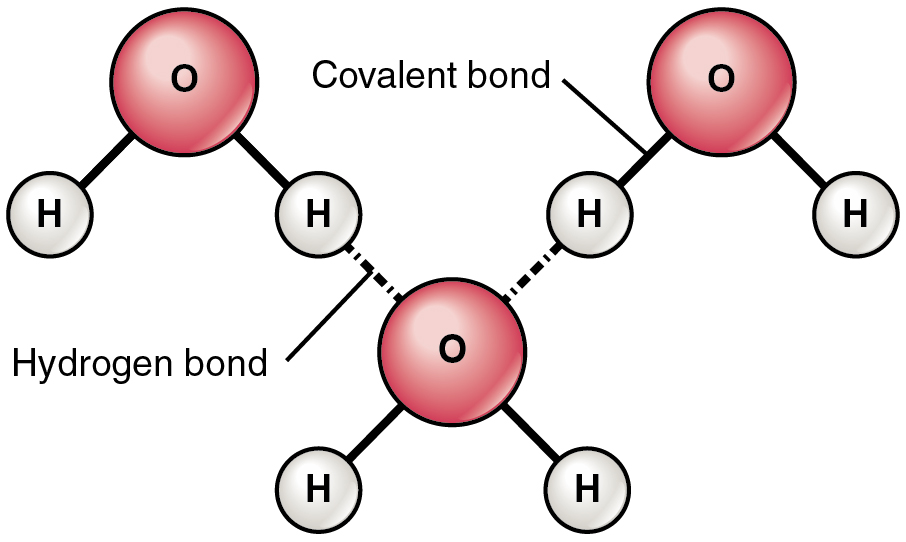
The volume of water increases when it is frozen because the hydrogen bonds between its molecules become fixed to form a “crystalline” lattice as kinetic energy is lost.


Water is composed of two hydrogen atoms that are covalently bonded to a central oxygen atom. Water is polar. This means that there are partially positive and partially negative charges within a water molecule.  The electrons are pulled towards the oxygen more than they are the hydrogens. This is because the oxygen is more electronegative than the hydrogens. Thus, because electrons are negatively charged and they are pulled towards the oxygen, oxygen becomes slightly negative. Likewise, because the electrons are pulled away from the hydrogens, the hydrogens become slightly positive.


The slight charges within water molecules creates an intermolecular force between several water molecules called a hydrogen bond. The hydrogen bonds of water exist between the hydrogen of one water molecules and the oxygen of a second water molecule.


A substance freezes when its temperature decreases past its freezing point. Temperature is a reflection of the average kinetic energy amongst the molecules of a substance. Thus, when water freezes, it loses kinetic energy. Kinetic energy is the energy of movement. A decrease in kinetic energy and temperature implies that the water molecules are moving less.


As the kinetic energy of the water molecules decreases, the hydrogen bonds between water molecules become fixed. According to International Association for the Properties of Water, a lattice of water molecules forms “where each hydrogen atom is line between two oxygen atoms”. There is a lot of open space between the water molecules of the “crystalline” structure of ice. Thus, the volume of frozen water expands when it freezes.

Wednesday, July 9, 2014

"The term investment, as used by economists, refers to the purchase of bonds and shares of stock."

Assuming that this is a true or false question, the answer is “false.”  This statement does describe how most people use the term “investment,” but it is not how that term is used in economics.


When lay people talk about investment, they are talking about saving their money in some way that will earn them a return.  Often, this means buying stocks and bonds.  They hope to make money in the future as their stocks (hopefully) increase in price and pay dividends and they expect their bonds to pay off when they mature.


In economics, “investment” typically refers to businesses buying capital goods so that they can increase their ability to produce goods and services that they will sell.  For example, if a car manufacturer builds a new factory with lots of new robots, they are engaging in investment.  If an online retailer buys new software for tracking their inventory, they are investing.  These goods will help them to produce and distribute the things they sell more efficiently.


Both uses of the word “investment” do have to do with using money in ways that do not help you now but will help you in the future.  However, economists do not consider buying stocks and bonds to be investment in economic terms.

How effective is the use of personal pronouns in Finuala Dowling's poem "To the doctor who treated the raped baby and who felt such despair"?

The use of personal pronouns in Finuala Dowling's poem "To the doctor who treated the raped baby and who felt such despair" are effective in that they lend to the poem a feeling of intimate conversation between the poem’s narrator and the doctor at the hospital.


This free verse poem (25 lines) of one relatively long stanza methodically moves to its dramatic conclusion, employing the personal pronouns “I”, “us”,” you”, and “we." The personal pronoun “you” is used the most. This gives this poem its emotional power as the narrator is directing words directly to the doctor who had the unpleasant task of having to care for a baby horrifically raped.


The incessant use of “you” drives home the point that the narrator is disgusted at this terrible act and feels greatly for the emotional and mental toll it must have taken on the doctor. While doctors and other health care professionals are trained to not take their jobs and patient associations personally, no doubt this is easier said than done and certainly the narrator is addressing this issue here in this particular poem.


Consider the powerful use of “you” in these three lines:


“and while you staunched”


“and when you administered an infant-sized opiate”


“and when you called for more blood”


These are just three examples of what this doctor had to do to save this raped infant's life. He or she had to staunch the baby’s blood flow from its rape injury or injuries. The doctor had to give the infant a powerful drug to dull her senses so she wouldn’t feel pain. In addition, the doctor had to call for more blood as the situation was evidently critical.


So, we see what this doctor is really dealing with. It almost feels as if we ourselves are saying “you” to the doctor as the poem becomes personal to us, the readers. This feeling of personalizing the poem is also achieved by Finuala Dowling using the personal pronoun “I” as the narrator tells his or her story.


We are witnessing a heartfelt talk to the doctor. The people involved in this incident have empathy for this doctor. The poet effectively utilizes personal pronouns to make the point that those who witnessed what the doctor did are grateful.


Furthermore, the personal pronoun “we” is used in these lines:


“…we all slept in trust (line 22)


… that you could do what you did.” (line 24)


Therefore, personal pronouns are a way to bring readers deeper into a poem and its subject matter so that they can better identify with the characters that populate the poem.

Tuesday, July 8, 2014

How would the story "Through the Tunnel" change if it was told in first-person narration?

For one, the story could not really exist as it is if it were told from Jerry's mother's first-person perspective.  Because she is clearly unaware of the dangerous choices Jerry is making when she's not with him, the story would not include his time with the older boys, practicing, or actually swimming through the tunnel.  It would likely just focus on her own anxieties as she sits on the "safe beach."


If, however, the story were told from Jerry's first-person perspective, then we would lose, most importantly, all the references to what his mother is thinking as well as what the older boys think when he joins them in the "wild bay."  Because her internal conflict is helpful to our understanding of where Jerry is in his maturation and development, we would miss the majority of that context if we were unable to know her feelings and fears.  We might even condemn her for her choice to allow a child who seems so incapable of making good decisions independently to leave her sight.  Further, it helps us to see how the older boys view him as well, to know pretty clearly how they interpret his childish antics.

Who is the "purple Host" in Emily Dickinson's poem "Success is counted sweetest"?

In "Success is counted sweetest," Dickinson writes:


Not one of all the purple Host


Who took the Flag today


Can tell the definition


So clear of victory


In this context, "purple Host" refers to a conquering army, which, having defeated its enemy, captures its flag in victory.


In the ancient world, particularly during the era of the Roman Republic, purple was the color both of royalty and of victory. Victorious generals would wear the toga picta, a solid purple toga decorated with gold, as a symbol of their success in battle.


Dickinson is drawing a contrast between those who know success and those who know failure, and making a statement about which of the two would appreciate success more. Dickinson makes her point by using the image of a victorious army in contrast with a dying, fallen soldier. She is inferring through this image that only the dying soldier fully understands and appreciates victory. In the same way, she is saying that only those who have known failure can fully appreciate success.

What are some of Piggy's characteristics?

Piggy is described in the novel, Lord of the Flies, as a short, heavy individual who suffers from asthma. Piggy is susceptible to verbal and physical abuse from the boys because of his unintimidating appearance and attitude. He is fearful of the other children on the island, especially Jack and Roger, and seeks protection from Ralph. He avoids physical labor whenever possible and is constantly quoting his aunt's opinions. Piggy is loyal to Ralph, and his character represents civility and knowledge. He is innovative and intelligent which is evident by his suggestion to build a sundial, explanation of the conch, and pragmatic approach to understanding the existence of the beast. Piggy is viewed as a strong-willed character who challenges Jack's authority during meetings, as well as reprimands the boys for not following Ralph's directives. Piggy is a rule-follower and reminds the children not to talk over one another at several assemblies. Piggy has a good memory and reminds Ralph of the importance of maintaining a signal fire and building shelters. One of Piggy's most notable characteristics is his poor eyesight. He wears glasses, which is a symbol for knowledge, and is constantly rubbing and cleaning them throughout the novel.

Monday, July 7, 2014

What is the historical era of "The Bet" by Anton Chekhov, and what is its significance to the story?

"The Bet" is a story that could be placed in just about any time period.  Its subject matter is a debate about the merits of capital punishment versus life in prison.  The lawyer believes that life in prison is better than death, because living is better than no life at all.  


"To live anyhow is better than not at all."


The banker believes otherwise.  He believes that capital punishment is more humane.  Their disagreement leads to the bet between the two men.  It's at that point that the reader gets a firm indication as to the historical context of the story.   


The agreement provided for every detail and every trifle that would make his imprisonment strictly solitary, and bound the young man to stay there exactly fifteen years, beginning from twelve o'clock of November 14, 1870, and ending at twelve o'clock of November 14, 1885.


Those dates make perfect sense, because they are right in the middle of Chekhov's life.  He was born in 1860 and died in 1904.  Additionally, Chekhov wrote "The Bet" in 1889.  It makes sense that he would place his story during a time period that he was familiar with.  But why would Chekhov write a story about capital punishment in 1889?  A possible reason was that the electric chair, as a method of execution, was first proposed in 1881.  It went through a development cycle and was first used to kill somebody in 1890.  I guarantee its use and capital punishment were popular topics at the time.  


Chekhov placed "The Bet" right in line with what was happening in his current time period.  His story works as a sort of social commentary on the pros and cons of life imprisonment and capital punishment.  

Sunday, July 6, 2014

According to the book Number the Stars, how many Jews lived in Denmark?

There were about seven thousand Jews living in Denmark at the start of World War II.


Denmark is a small country, but a mighty one. When Denmark was invaded by the Nazis during World War II, the country did not submit quietly. Although they had only a small navy and not many soldiers, they did what they could. This included sinking their entire fleet so the Nazis couldn't get it, and smuggling the Jewish population out of Denmark.


"It is their way of tormenting. For some reason, they want to torment Jewish people. It has happened in the other countries. They have taken their time here—have let us relax a little. But now it seems to be starting." (Ch. 3)


Annemarie’s best friend Ellen is Jewish. She tells her father that “all of Denmark must be bodyguard for the Jews” and he agrees. When her father tells her that the Nazis have a list of all of Denmark’s Jews and plan to take them away, she wants to know where. He tells her they do not really know where.


"We don't know where, and we don't really know why. They call it 'relocation.' We don't even know what that means. We only know that it is wrong, and it is dangerous, and we must help." (Ch. 4)


Annemarie's family helps smuggle as many Jews out of the country as they can. They use coffins to hide supplies and handkerchiefs to send messages. It is as if the entire country joins the underground movement against the Nazis. 


In the Afterword to the book, we are told that “nearly seven thousand people” were smuggled into Sweden by the people of Denmark. The Danish people were able to help almost all of the Jewish population, except those who did not heed the warning. The entire country defied the Nazis. Because of the brave people of Denmark, few of their Jews died.

How do I find literary devices in "The Road Not Taken"?

One of the simplest literary devices to find in this poem is imagery.  Imagery refers to sensory experience represented through language.  So, any time the speaker describes something that you can see, hear, taste, smell, or touch, the poet is using imagery.  We can identify the first line as imagery, then: "Two roads diverged in a yellow wood."  The leaves are all yellow, telling us that it is fall, and there are two roads that split away from one another between the trees. 


We can also identify symbolism in this poem, if not before the final stanza then in the final stanza.  The speaker equates one road with having made "all the difference" in his life (line 20).  Although it is lie because he has already said that both roads were "worn [...] about the same," it shows us that the roads have more meaning that just their literal one (10).  Thus, we can understand that the roads symbolize choices in one's life.

Saturday, July 5, 2014

What is the cause Mahatma Gandhi was campaigning about? And why did he support this cause?

Mahatma Gandhi was a key figure in the campaign for Indian independence from Britain. During that time period, there was much racism directed at the native Indian population by the British occupiers and Indians were severely repressed and mistreated. The racism extended into politics with racially based laws. This included a law that allowed any Indian to be jailed without any legal trial or defense for sedition. This law was used to jail anyone deemed "inconvenient" as the defense of an Indian against the word of one of the British was nearly impossible whether it was true or not. These factors, along with a love of peace and truth, sparked Gandhi's desire for freedom for India. 


He is most known for his use of non-violent methods of protests in the belief that truth could not be arrived at through violent measures. His methods of protest included non-cooperation with the British, or encouraging people not to work for british employers or consume british goods. He also believed that freedom could not exist unless everyone was equal, and in the spirit of this belief went on a hunger strike when hostilities between the Hindu and Muslim population erupted.

Friday, July 4, 2014

What actions did The First Continental Congress take?

The major action the First Continental Congress took was to proclaim what was known as the "Association," basically an agreement to boycott English goods and to call for the creation of a network of committees to enforce the boycott and to communicate between the colonies. The Congress also issued a petition to King George, stating their grievances and claiming that they feared being reduced to "servitude," and sent a list of rights and grievances to the legislatures of each of the colonies as a gesture of unity. These gestures may seem fairly cautious, and they were, but the Association in particular had a dramatic effect. As mentioned above, committees were created across the colony at the colonial, county, and city level to enforce the terms of the Association. Historian T.H. Breen has recently argued that because these committees, which used intimidation and even violence to enforce the boycott, drew their legitimacy from a central body in the form of the First Continental Congress, they represented a early step toward a national revolutionary consciousness. So the First Continental Congress played a very important role in the outbreak of the American Revolution.

What would have happened if Eveline had gone away with Frank to his country?

James Joyce is clever in how he writes "Eveline," as he makes it appear that leaving to "Buenos Ayres" with Frank would be the heroic thing to do. However, as in all the stories in Dubliners, the answer is not that easy. Joyce suggests that if Eveline leaves her father and the other children she has to take care of in Dublin, she would move to a foreign country where she doesn't speak the language, doesn't have family, and would basically do the same thing (take care of a house, work, take care of children, etc.). Either way, Eveline would be ensnared by a sense of duty.


While Eveline found Frank exciting as "He had tales of distant countries. [...] He had sailed through the Straits of Magellan and he told her stories of the terrible Patagonias," she also felt duty-bound to her family. She even heard her dead mother speaking Gaelic to her, "Derevaun Seraun," which roughly translates to "The end of pleasure is pain." If Eveline had left with Frank, she would likely have fallen into the same habit of being completely duty-bound to her family.


However, there is a much darker way to look at what might have happened to Eveline: she might have been sold into prostitution. There is no mention of what Frank is doing in South America other than the narrator saying, "He had fallen on his feet in Buenos Ayres." What could this mean? In the early 20th Century, sex trafficking to Buenos Aires was rampant. Sailors would lure women away from countries like Ireland and take them to countries like Argentina (see attached journal essay). 


Either way, it's likely Eveline's life would have been no better, and perhaps worse, had she decided to move to Argentina with Frank. Perhaps her duty to her family saves her from suffering a much more tragic story.

Thursday, July 3, 2014

What are some symbolic objects for Thorin?

There are a few things that could be considered symbolic for Thorin: an oak branch, a map and key, and the Arkenstone.


The oak branch is a bit obvious, as it is the source of his epithet "Oakenshield", but it is probably the most important. During the battle he participated in at Moria after his kingdom was taken by Smaug, he broke his shield, so he picked up an oaken branch to use instead, hence the name "Oakenshield".


The map and key are also important to Thorin because they are what started Thorin off on his quest to the Lonely Mountain. Without them, he never would have been able to find and unlock the secret door that would lead them into the mountain.


The final symbol is the Arkenstone, also known as the Heart of the Mountain. It is the symbol of his right to rule, his kingship, which is why he is so eager to find it in The Hobbit: without it, the other dwarves would not follow him.